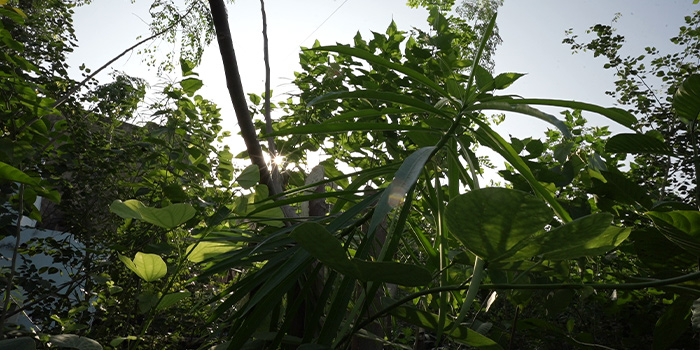
A city is not just structures, roads, and…
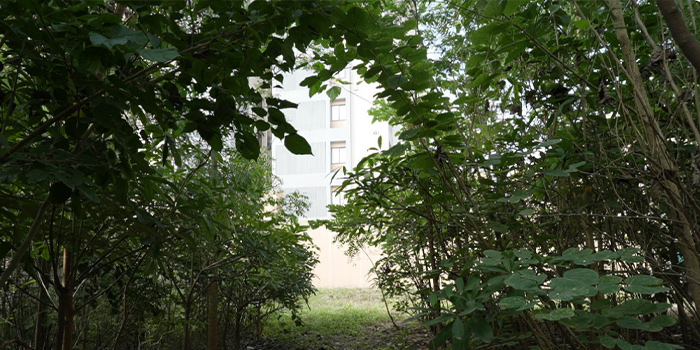
Native vs Fast-Growing Trees: Choosing the Right Urban Species
Planting trees in an urban area may look simple, but choosing the right species requires much more thought. A tree that grows quickly is not automatically the right choice, and a native tree is not automatically suitable for every location. The success of an urban plantation depends on how well the selected species match the soil, climate, available space, water conditions, surrounding landscape and long-term purpose of the project.
At Harmony Urban Forest, we look at tree selection as part of a larger ecological plan. An urban forest should not be created only to increase the number of trees. It should develop into a healthy green system where different plants can grow, support biodiversity and become part of the surrounding environment.
This is where the difference between native trees and fast growing trees becomes important. Native species can provide strong ecological connections with the local environment, while suitable fast growing trees can help establish vegetation and canopy at an earlier stage. The right choice is often about finding the balance between these characteristics rather than choosing one category over another.
Native Trees and Fast-Growing Trees Serve Different Purposes
Native trees are naturally associated with the region where they occur. They are adapted to local climatic conditions and can have established relationships with insects, birds and other organisms. When carefully selected, they can become an important part of a biodiversity-focused plantation.
Fast growing trees are generally selected because they can develop height, branches or canopy relatively quickly. This can be useful when a project needs earlier vegetation cover, shade or screening.
However, growth rate should never be considered separately from long-term performance. A tree may grow rapidly during its early years but still require considerable maintenance or water. Another species may develop more slowly but become a stronger long-term component of the forest.
For an urban forest, the question is therefore not simply which tree grows faster. The better question is which species can perform the required ecological and landscape role at that particular site.
Why Native Species Matter in Urban Afforestation
Urban areas can become disconnected from the natural ecosystems that once existed around them. Buildings, roads and construction can replace native vegetation and reduce habitat opportunities for local wildlife.
Native species can help reconnect some of these ecological relationships. Their flowers, fruits, leaves, bark and structure may provide resources for organisms that are naturally associated with the region.
This makes native species especially valuable in afforestation projects where the objective goes beyond visual greenery. A diverse plantation can gradually become a living habitat rather than simply an area filled with trees.
At Harmony Urban Forest, species selection is considered according to the local environment and the intended purpose of the project. Climate, soil, available water, existing vegetation and future growth are important considerations before plantation begins.
The aim is to create green spaces that can become part of the local ecological system instead of introducing a standard tree list to every project.
When Fast Growing Trees Can Be Useful
There is also a practical role for fast growing trees in urban plantation planning. Some sites need vegetation to develop relatively quickly because they require shade, visual screening, wind protection or early canopy development.
Fast-growing species can help provide this early structure while other trees continue their slower development. In a mixed plantation, different growth rates can actually contribute to a changing forest structure.
However, fast growth should be assessed alongside mature height, canopy spread, root behaviour, water requirements, maintenance needs and compatibility with surrounding plants.
This is particularly important in cities where trees may be planted close to buildings, roads, electrical infrastructure, pathways or other facilities. A species that performs well in an open field may not be suitable for a restricted urban site.
Therefore, the use of fast growing trees should be based on the role they need to perform rather than simply their growth speed.
The Right Species Depends on the Site
There is no universal tree list that can work equally well for every urban plantation.
A dry site with limited irrigation has different requirements from a well-watered corporate campus. A narrow roadside space has different limitations from a large unused industrial plot. Similarly, a biodiversity restoration project may have different priorities from a landscape designed mainly for shade and visual screening.
Before selecting species, we consider factors such as:
- Existing soil condition
- Local climate and rainfall
- Available water
- Land size and shape
- Existing vegetation
- Sunlight exposure
- Surrounding buildings and infrastructure
- Intended tree density
- Long-term maintenance requirements
This site-specific approach helps determine whether native species, suitable fast growing trees or a combination of both would be appropriate.
Tree Density Should Match the Forest Objective
Tree density is not simply about planting the maximum number of trees in a particular area. It should support the intended structure of the plantation.
A conventional landscape may require more space between individual trees so that each canopy can expand freely. A Miyawaki method forest, on the other hand, uses a denser planting arrangement to encourage the development of a multilayered forest structure.
The important point is that density should be planned according to species characteristics and site conditions. If plants are placed without considering their expected mature size, competition for sunlight, water and nutrients can become difficult to manage.
Appropriate tree density can allow taller trees, smaller trees, shrubs and ground vegetation to occupy different levels of the same space. This creates a more complete forest structure while making better use of limited urban land.
How Native and Fast-Growing Species Can Work Together
The choice does not always have to be native versus fast-growing. In some projects, both characteristics can be considered together.
A native species may also be a fast-growing species, while another native species may develop more slowly but provide important ecological value. This means growth rate and origin should be evaluated separately.
In a Miyawaki method forest, the planting design can include species with different growth habits and expected heights. Some plants may develop quickly during the early stages, while others gradually become important components of the mature forest.
This creates a forest that changes over time. The early appearance may be dominated by rapidly developing vegetation, while the longer-term structure becomes more diverse as different species mature.
The objective is not to make every tree grow at the same speed. It is to create a compatible plant community that can develop together.
Biodiversity Should Be Part of the Decision
A plantation can contain hundreds of trees and still offer limited biodiversity if most of those trees belong to the same species or provide similar habitat conditions.
Biodiversity is influenced by the variety of plants, vegetation layers, flowering periods, fruiting patterns, canopy structures and ground conditions present in an area.
Native trees can be particularly useful in this context because they may have ecological relationships with local insects, birds and other organisms. Combining different suitable species can create a more varied habitat.
A well-planned urban forest can therefore become more than a green backdrop. It can provide different spaces for life to develop.
For Harmony Urban Forest, biodiversity is an important consideration when planning plantation projects because the long-term goal is to create functioning green ecosystems rather than only increase plantation numbers.
Soil Restoration Can Change the Outcome
Tree selection cannot compensate for severely unsuitable soil conditions. Urban and industrial sites may have compacted soil, low organic matter, poor drainage or disturbed ground caused by construction and other activities.
This is why soil restoration is an important part of plantation preparation. Understanding the existing soil helps determine what improvements may be required before planting.
Better soil conditions can support root development, moisture retention and microbial activity. They can also help young plants establish more successfully during the early stages.
For a Miyawaki method forest, soil preparation is especially important because the plantation is designed to establish dense vegetation within a relatively limited area.
At Harmony Urban Forest, soil conditions are considered alongside species selection rather than treated as a separate issue. The soil below the plantation directly influences what can develop above it.
Landscape Planning Goes Beyond Appearance
Urban plantation projects need to work with the existing landscape rather than sit separately from it.
A forest area may be located beside office buildings, industrial facilities, residential developments, roads, walkways or open spaces. Its design should consider how people will move around it, how water reaches the area and how mature vegetation will interact with nearby structures.
A well-planned landscape can allow a forest to become an integrated environmental feature. Paths, open spaces and existing vegetation can be planned around the growing plantation without unnecessarily disturbing its ecological development.
This is particularly valuable for corporate properties where unused land can become a long-term green asset rather than remaining an inactive space.
Native vs Fast-Growing: What Should You Choose?
The answer depends on what the project needs to achieve.
If the primary objective is ecological restoration, strengthening local habitats and supporting biodiversity, suitable native species may receive greater importance.
If early canopy development, screening or rapid vegetation establishment is required, selected fast growing trees may have a useful role.
If the project has several objectives, a carefully planned combination may provide a more practical solution.
The important point is not to select trees based on one characteristic alone. Growth speed, ecological suitability, mature size, soil conditions, water availability and the surrounding landscape all need to be considered together.
For a Miyawaki method forest, this becomes even more important because species are planted as part of a connected multilayer system rather than as isolated trees.
Choosing Species for Corporate Plantation Projects
Corporate land can provide valuable opportunities for afforestation when unused or underused areas are planned thoughtfully.
Companies may have open land around factories, offices, campuses, boundary areas or other properties. These locations can be developed into green spaces that contribute to environmental goals while improving the surrounding landscape.
Such projects can also become part of corporate social responsibility CSR initiatives. Instead of conducting a one-day plantation drive, organizations can develop a longer-term forest project where planting, maintenance, growth and ecological development can be monitored over time.
A Miyawaki method forest can be considered for suitable corporate sites where dense native planting is appropriate. The final approach should still depend on site assessment, soil conditions, tree density and the project’s objectives.
Carbon Offset and Tree Selection
Carbon storage is another reason organizations consider tree plantation, but carbon should not be the only measure of a successful forest.
Different species accumulate biomass at different rates, while the total carbon outcome also depends on survival, forest development, site conditions and long-term management.
A plantation may contribute to carbon sequestration, but a formal carbon offset project involves additional requirements for measurement, monitoring and verification. Therefore, organizations should distinguish between general carbon benefits from vegetation and verified carbon offset claims.
At Harmony Urban Forest, carbon-related objectives can be considered alongside biodiversity, soil health, landscape improvement and long-term forest development. This broader approach helps ensure that carbon does not become the only reason for planting trees.
Our Approach to Selecting Urban Tree Species
At Harmony Urban Forest, we begin with the site rather than a predetermined list of trees.
We study the existing landscape, soil conditions, available space, water requirements and environmental objectives before developing a plantation strategy. The selection can include suitable native trees, shrubs and other vegetation, with fast growing trees considered where they provide a useful role within the overall design.
For suitable projects, the Miyawaki method forest approach can bring together different vegetation layers and higher tree density within limited urban land.
Our focus is on creating green ecosystems that can develop over time. Whether the project is connected with afforestation, corporate social responsibility CSR, biodiversity restoration or a broader environmental initiative, the planting strategy should be appropriate for the land and its future use.
A Better Way to Think About Tree Selection
The native-versus-fast-growing debate can sometimes make tree selection appear like a choice between two completely different approaches. In reality, both characteristics can have a place in a well-planned plantation.
Native species can strengthen ecological connections, while suitable fast growing trees can support early vegetation development. Some trees can provide canopy, others can occupy the understory, and shrubs and ground vegetation can complete the lower layers.
The real goal is to understand how all these elements can work together.
An urban forest should be planned for the landscape it will become, not only for how it looks on planting day. With suitable tree density, healthy soil, appropriate species and long-term planning, a plantation can gradually develop into a richer green environment.
Conclusion
Choosing between native trees and fast growing trees is not simply a question of which type grows better. The right choice depends on the site’s climate, soil, available space, water conditions, surrounding landscape and environmental objectives.
Native species can play an important role in biodiversity-focused afforestation, while suitable fast growing trees can help establish early vegetation and canopy. When their roles are understood properly, both can contribute to a well-designed urban forest.
A Miyawaki method forest takes this planning further by combining different plant species and growth patterns within a carefully considered tree density. Soil restoration provides the foundation, while biodiversity and landscape planning help shape the long-term ecological value of the project.
For companies, these projects can also become meaningful corporate social responsibility CSR initiatives and may contribute to wider environmental objectives, including carbon offset planning where appropriate standards and verification requirements are followed.
At Harmony Urban Forest, we believe successful plantation begins with understanding the land. The goal is not simply to plant more trees, but to select the right species and create a green system that can grow, adapt and become part of the surrounding environment.
FAQs
1. Are native trees always better than fast growing trees for an urban forest?
Not necessarily. Native trees can provide strong ecological value and support local biodiversity, while suitable fast growing trees can help establish vegetation more quickly. The right choice depends on soil, climate, available water, land size, maintenance requirements and the purpose of the project. In some cases, a combination of suitable species can provide a more balanced long-term result.
2. What is the main advantage of using native trees in afforestation?
Native trees are adapted to the local environmental conditions and can have established relationships with local wildlife. When suitable species are selected, they can contribute to biodiversity and habitat development while becoming part of the surrounding ecological system. Their suitability still needs to be assessed according to the specific site rather than assumed only because they are native.
3. When are fast growing trees useful for urban plantation?
Fast growing trees can be useful when a project requires quicker vegetation development, early shade, screening or canopy formation. However, growth speed should be considered alongside mature size, water requirements, root characteristics, maintenance and compatibility with nearby infrastructure. A rapidly growing species is useful only when it fits the long-term purpose of the site.
4. How does tree density affect a Miyawaki method forest?
Tree density influences how plants compete for sunlight, water, nutrients and growing space. In a Miyawaki method forest, relatively dense planting helps create a multilayered structure where canopy trees, smaller trees, shrubs and ground vegetation can develop together. The density still needs to be planned according to species, soil, climate and available land.
5. Why is soil restoration important before planting trees?
Poor or compacted soil can restrict root growth and reduce the ability of young plants to establish. Soil restoration can improve structure, organic matter, moisture retention and conditions for root development. This is particularly important in disturbed urban or industrial land where construction or previous land use may have affected the quality of the soil.
6. Can native and fast growing trees be planted together?
Yes, where the selected species are compatible with the site and the plantation objective. Some native species may also grow quickly, while others may develop more slowly but provide important ecological functions. A carefully planned combination can create different vegetation layers and allow the urban forest to change naturally as individual species mature at different rates.
7. How can an urban forest support biodiversity?
An urban forest can provide different vegetation levels, food sources and shelter for birds, insects, pollinators and other organisms. Using several suitable plant species can create greater structural variety than a uniform plantation. Native vegetation can be particularly valuable where the objective is to strengthen connections with the surrounding local ecosystem.
8. Can a Miyawaki method forest be part of corporate social responsibility CSR?
Yes. A Miyawaki method forest can be considered for suitable corporate land as part of corporate social responsibility CSR initiatives. Companies can transform unused or underused areas into green spaces while supporting afforestation, biodiversity and landscape improvement. The project should be planned around actual site conditions rather than treating every corporate property in the same way.
9. Does planting trees automatically create a carbon offset?
No. Trees can capture and store carbon as they grow, but a plantation should not automatically be described as a verified carbon offset project. Formal carbon offset activities generally require an appropriate methodology, measurement, monitoring and verification. Carbon can be one objective of an urban forest project while biodiversity, soil health and landscape value remain important outcomes.
10. How does Harmony Urban Forest approach species selection?
At Harmony Urban Forest, we consider the site before deciding the plantation mix. Soil condition, climate, water availability, existing vegetation, land size, tree density and long-term objectives can all influence species selection. Depending on the project, suitable native species and fast growing trees can be incorporated into a broader afforestation strategy designed for the specific landscape.
Related Posts