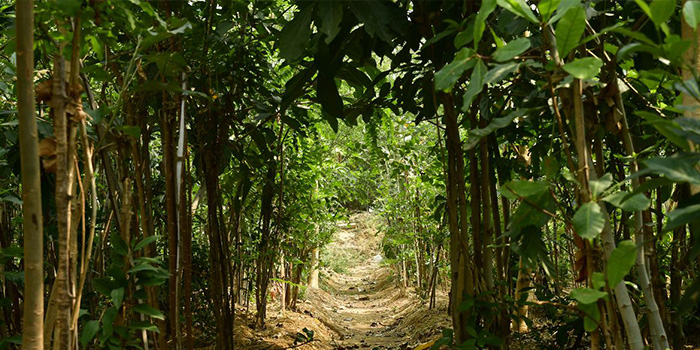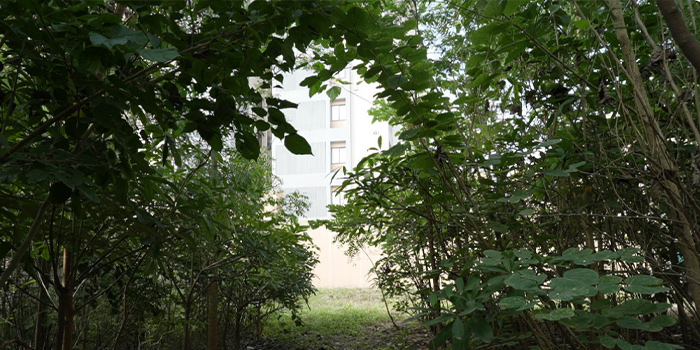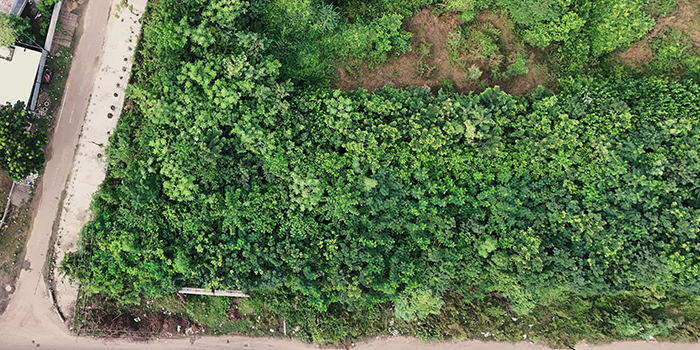
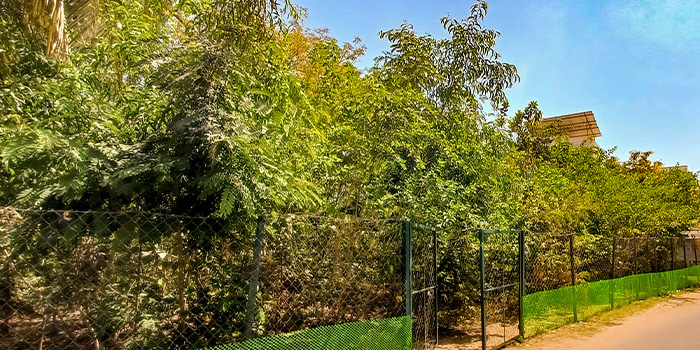
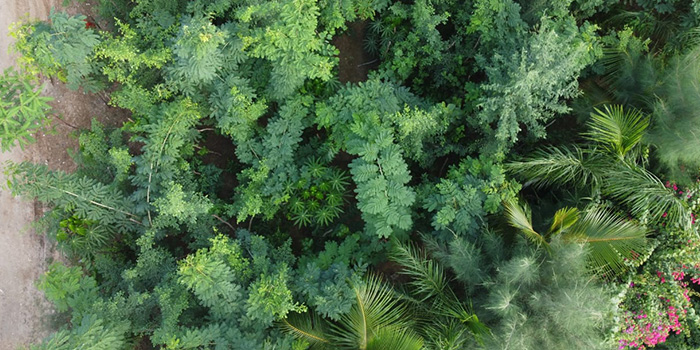
An urban forest is more than a group…
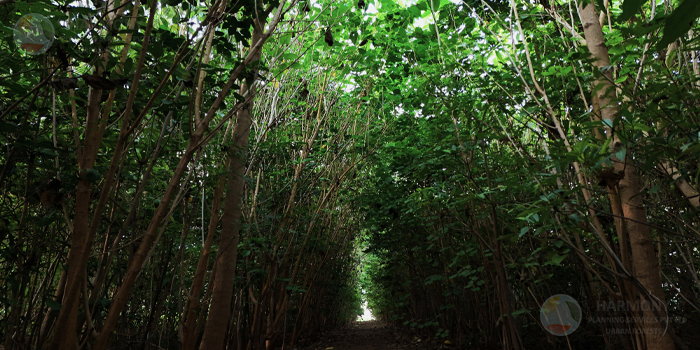
Urban Forest & Miyawaki Method Forest for Urban Heat
As cities expand, an urban forest can provide a practical nature-based solution for reducing heat and improving the quality of the urban landscape. Well-planned afforestation can increase green cover, while suitable tree density helps create shade and cooler microclimates. These green spaces can also strengthen biodiversity by providing habitats for native birds, insects, and other organisms.
What Is a Miyawaki Method Forest?
Miyawaki method forest is a plantation system where the main objective is to establish a rich variety of vegetation in a limited space. The system involves choosing the right native plants, soil preparation, and planting of trees, shrubs, and ground covering plants using high density of trees.
Miyawaki forest schemes can be implemented in India for purposes of urban forestry, afforestation, landscaping, and ecology. Successful implementation of a Miyawaki forest is dependent on various factors including climate, choice of indigenous plants, soil type, tree density, water, and maintenance.
While traditional plantation schemes would typically involve efforts to maximize the number of trees in such schemes, the Miyawaki model involves efforts to create a more diverse and layered system of vegetation. As such, it is especially suitable for urban areas where land is scarce.
Understanding the Urban Heat Island Effect in Indian Cities
The Indian cities have been getting hotter each passing year. The fast pace of urbanization, increased constructions, and decreased greenery are causing an environmental problem that is called Urban Heat Island (UHI). This is a condition where urban areas have much higher temperatures than the surrounding rural areas owing to excessive heat trapping and inadequate cooling.
The impacts of the Urban Heat Island effect are becoming highly noticeable in Indian cities. The Urban Heat Island effect has been highly evident in India over the last ten years. Major metropolitan cities such as Delhi, Mumbai, Ahmedabad, Bengaluru, Hyderabad, and Chennai are experiencing increasing temperatures, heat waves, and thermal discomfort because of the rapid urbanization and deforestation. There is an increase in the frequency of heat waves causing discomfort and health risks to people living in the cities. This results in increased energy consumption due to the constant requirement of air conditioning in houses and offices.
The major cause of the urban heat island phenomenon is the substitution of natural surfaces with concrete buildings, asphalt roads, glass, and pavements. Such materials store plenty of heat from the sun during the day and release it slowly in the evening. Therefore, cities continue to stay warm long after the sun has set. Consequently, the temperature in urban areas keeps increasing constantly.
Other factors that cause urban heating are the decrease in vegetation and availability of open areas. Plants have a cooling effect on the surrounding area because of shade and transpiration. However, with urbanization, there has been a decrease in the size of parks, forests, and roadside plants.
Vehicle emissions, industrial activities, and increasing use of air-conditioning systems further intensify the problem. Air conditioners release hot air into the surroundings, creating a cycle where higher temperatures lead to greater cooling demand, which again increases outdoor heat levels and energy consumption.
City heat can affect the environment as well. Higher temperatures lead to bad air quality, decreased urban biodiversity, and strain on existing infrastructures. Most cities have no shaded places, and too much pavement makes it unpleasant for people to be outside.
It is important to note that climate change is making the situation worse. Global warming and rampant urbanization are making cities of India more susceptible to the heat. This has led to a pressing need for sustainable urban cooling solutions.
Tree Density and Fast Growing Trees in a Miyawaki Method Forest
Tree density plays a very significant role in designing the Miyawaki forest plantation. Dense plantation includes arranging a wide variety of plants in limited space so as to form different levels of vegetation. But density should be chosen based on the site conditions, soil type, availability of water, species requirements, and maintenance considerations.
Fast growing trees can help establish vegetation cover relatively quickly, but growth speed should not be the only factor when selecting species. A successful urban forest should include suitable native species that can adapt to the local climate and soil conditions while supporting long-term biodiversity.
Combining fast growing trees with other native species can help create a diverse plantation structure. Proper species selection and tree density can contribute to canopy development, habitat creation, shade, and ecological stability
Urban Heat Island Solution with Miyawaki Method Forest
A well-designed miyawaki method forest can transform small and underutilized urban plots into productive green spaces. By combining fast growing trees with native shrubs and ground-cover plants, an urban forest can develop multiple vegetation layers that provide shade and support ecological balance.Proper soil restoration is another important part of establishing a healthy miyawaki method forest. Improving soil structure and organic content before plantation allows plants to develop stronger root systems and helps the forest remain resilient under changing urban conditions.
The persistent increase in temperature of the city is associated with the reduction in green space and the development of urban infrastructures, leading to warmer urban environment and discomfort. In such circumstances, highly dense Miyawaki method forest India projects have emerged as an effective nature-based solution to maintain ecological balance on a limited land area. The highly dense forest, which grows rapidly and provides layers of green cover and acts as a natural source of heat reduction and humidity improvement, is being considered as a means to restore biodiversity in cities.
The success of this approach depends on the structured planning of the Miyawaki plantation model, which focuses on using native species planted in high density for faster forest development. Implementation support from an urban greening project company and a landscape restoration firm India helps scale these projects across urban zones. These efforts also align with India’s climate responsibility programs, supporting long-term environmental improvement and urban temperature control.
Miyawaki method Forest Model: A Step Forward for Corporate Sustainability India
Nowadays, corporations have started giving more importance to being environmentally responsible, and sustainability in corporate India has become an integral part of their growth strategy. Corporations are moving from the stage of doing simple CSR activities to developing a greener model in which they actually help in improving the environment while doing business. This can be done by incorporating dense forest areas in corporation premises.
For companies, developing an urban forest can become a long-term environmental initiative rather than a one-day plantation activity. Such projects can be integrated into corporate social responsibility CSR programs while also improving the surrounding landscape and creating visible sustainability benefits.A carefully planned miyawaki method forest can also support corporate social responsibility CSR objectives by providing measurable outcomes such as increased green cover, improved biodiversity, and better utilization of unused land.
The Miyawaki method forest model India is widely adopted because it creates fast-growing native forests that improve air quality, reduce urban heat, and enhance biodiversity. These miniature ecosystems assist in the creation of sustainable objectives for organizations and increase climate resilience. In many cases, companies work together with environmentalists to facilitate the proper planning, plantation, and maintenance of these ecosystems.
A Miyawaki method forest is critical for creating dense native forests in tiny urban plots. The consultants will analyze the soil conditions, climate patterns, and the diversity of species in the area to help design an excellent plantation plan that ensures rapid growth of forests. Through their expertise, wastelands can be converted into greener ecosystems that reduce heat and improve the quality of the air around.
Projects using Miyawaki method forests can even be included under corporate social responsibility (CSR) if appropriate lands and environment objectives are there. Rather than considering tree planting as a one-day event, companies can work on creating urban forest projects that will concentrate on native flora and fauna, improve the soil, and increase green cover.
Miyawaki corporate projects can be designed within appropriate campuses, institutional land, community land, or any other suitable land. The project design can encompass land assessment, soil restoration, selection of indigenous species, plantation, irrigation, and monitoring.
Such projects can connect corporate social responsibility with environmental restoration, biodiversity conservation, landscape improvement, and sustainable urban development.
Benefits of Miyawaki Urban Greening for Sustainable Cities
Proper tree density and proper choices of species make or break the success of an urban plantation. Combining fast growing trees with slower native trees will result in sustainable ecosystems that maintain biodiversity in the long run. From the standpoint of landscape ecology, afforestation can create linkages between isolated green patches and make corridors between them. In this way, the urban forest becomes integrated into the overall green infrastructure.
It is becoming increasingly important to have urban greening schemes to build climate resilience. The plantation process that has been used in an organized manner brings many environmental benefits that will accrue in the future.
1. Temperature Reduction Impact
A cool environment is achieved through the dense plantation systems developed through the MiyaWaki green eco system in India that helps lower temperatures in the surrounding areas due to shading.
2. Air Quality Improvement
The fast-growing native forests help in taking out the pollutants and give out fresh air for respiration. This is done with the help of urban eco-restoration projects in India.
3. Biodiversity Restoration
It is even more crucial to use indigenous species for afforestation purposes in order to conserve biodiversity. It is possible to create a plantation where different types of trees will be planted at the right density to offer food, refuge, and nesting place for the species involved, thereby adding more ecological significance to the landscape.
4. Water Retention Enhancement
As the soil condition continues to improve, it promotes better absorption of water, which reduces runoff in case of heavy rainfall.
5. Climate Balance Support
These green systems help ensure environmental stability in the long run through lower carbon footprint and sustainable development models in urban centers in line with green infrastructure initiatives in India.
Biodiversity and Landscape Benefits of Urban Forests
An urban forest need not be restricted to providing only trees. A mixed plantation could give habitat to birds, insects, pollinators, and other living things, thereby playing an important role in landscape planning.
In projects that employ Miyawaki technique forests, different layers of flora may be used to develop diversity in the green cover. Trees, shrubs, and ground covers can fill different levels of the landscape and offer food and habitat to different animals.
From the point of view of landscape, the urban forest can also enhance the aesthetics of the unused land. If incorporated in parks, campuses, subdivisions, institutions, and corporate lands, these green spaces can form an essential component of the urban green infrastructure system.
Carbon Credit Plantation India for Sustainable City Growth Plan
However, nature-based initiatives may also be helpful in a carbon-offset strategy if their benefits related to carbon are measured and validated correctly. Nevertheless, plantation alone cannot be considered an alternative to emission reduction. It is supposed to be used along with climate action strategies. Effective afforestation could lead to biomass growth and carbon stock increase over time. If it is combined with the right monitoring system, such initiatives can help companies in seeking carbon-offset options.
As the need for sustainable development has grown over time, the value of carbon credit plantation in India has risen because it is a methodical way of minimizing negative effects on the environment. In this way, cities and industrial areas will be able to capitalize on the increase in greenery to achieve carbon credits that promote sustainability.
Such plantations will be planned through the scientific selection of native plants that will facilitate carbon absorption capacity and promote rapid ecosystem growth. Properly planned and monitored, urban environments can become successful carbon sinks that play their role in the balance of the environment. Coordination with environmentalists ensures that such projects are planned in harmony with sustainability objectives.
Urban forest and afforestation projects can contribute to carbon management by increasing biomass and storing carbon as vegetation grows. Carbon offset initiatives should be based on appropriate measurement, monitoring, and verification rather than assuming that every plantation automatically generates tradable carbon credits.
Miyawaki method forest projects can provide environmental benefits beyond carbon storage, including biodiversity restoration, soil improvement, green-cover expansion, and landscape enhancement. For this reason, carbon should be considered as one component of a broader environmental strategy rather than the only objective of an urban forest project.
Environmental Impact of Urban Forest
An urban forest has the ability to enhance the environment through increased vegetation cover, biodiversity, and improved urban landscapes. With proper afforestation, it will be possible to introduce suitable tree species that improve the urban ecosystem.
A Miyawaki Method Forest will allow for the development of vegetation even in small urban areas. The right density of trees, use of native as well as fast-growing trees, and soil restoration will assist in promoting vegetation.
Urban forests can also contribute to carbon storage as trees grow and biomass increases. When properly measured and verified, such projects may support broader carbon offset initiatives. For businesses, developing urban green spaces can also form part of Corporate Social Responsibility (CSR) and environmental sustainability programs.
The urban forest, through a landscape lens, is capable of turning potentially useful spaces into green areas through shading, habitat creation, and ecological benefits. All of these factors together make the urban forest an effective means of improving the environmental quality of cities.
Carbon Offset Plantation India Using Miyawaki Afforestation Method
The miyawaki method forest approach combines high tree density, native species, and layered planting to create compact ecosystems. The presence of fast growing trees can help establish vegetation cover relatively quickly, while other native species contribute to long-term ecological stability.
Soil Restoration for Miyawaki Method Forest
Soil rehabilitation is one of the necessary steps that should be taken before creating a Miyawaki method forest. Compact, poor-quality, and depleted soil can prevent the growth and development of plants’ roots and hinder their development.
This can include such issues as increasing organic matter, improving soil structure, soil water retention capabilities, soil drainage, and soil microorganism activity. The idea here is to provide an adequate growing environment for the chosen plants rather than treating the soil the same way regardless of the planting site.
However, before establishing a forest such as this one, the issue of soil restoration needs to be given serious consideration due to the fact that the condition of the soil is important for root establishment and plant survival.
Climate change has become a critical issue which has necessitated carbon offset plantation India to be one of the important approaches for businesses and urban designers seeking to mitigate their greenhouse gas emissions. The process involves creation of thick green belts which act as natural sinks for carbon dioxide in the atmosphere. This is an important component of environmental sustainability.
The implementation of Miyawaki afforestation technique in India allows for rapid forest formation using dense native planting techniques that create layered forests. Such forests mature rapidly and increase oxygen as well as biodiversity in cities. The inclusion of this technique in climate change policies will allow the organization to reduce carbon emissions effectively..
For businesses, these projects can also become a meaningful part of corporate social responsibility CSR planning. Instead of treating plantation as a short-term activity, companies can use an urban forest to create lasting environmental value within their operational landscape.
By combining afforestation, soil restoration, appropriate tree density, and native biodiversity, organizations can develop green spaces that provide benefits well beyond carbon absorption. This makes the miyawaki method forest a practical option for organizations looking to connect environmental action with long-term sustainability.
Conclusion
Nowadays, urban heat is not only considered to be an environmental problem; it is an actual living problem in urban areas. The example of Miyawaki forest India proves that natural planning can help to solve an environmental problem in urban areas successfully. In such a way, cities can lower temperatures, clean air, and restore biodiversity using natural planning.
Through the joint efforts of Miyawaki afforestation method and environmental planning by professionals, industries, governments, and developers are moving towards a sustainable future. With the help of experts like urban forest consultant India and implementing organizations like urban forest plantation India, unused areas are converted into productive green areas. In addition to this, schemes like carbon offset plantation India and carbon credit plantation India are making sustainability not only measurable but also effective and goal oriented.
FAQs
1. What is Miyawaki forest India?
The Miyawaki forest India is an intensive native forest planting approach which creates mini forests in cities that grow quickly to cool and increase biodiversity.
2. How does Miyawaki afforestation technique help cities?
The Miyawaki afforestation method is beneficial to urban areas by making layers of green cover using small land space that can cool the environment, purify air, and facilitate wildlife growth.
3. What role does corporate sustainability India play in urban greening?
Sustainability in India promotes companies to undertake green initiatives that minimize the impact on the environment and foster climate responsibility.
4. How does carbon credit plantation India work?
Carbon credit plantations in India provide companies the opportunity to generate carbon credits through enhanced green cover and reduced carbon emissions.
5. Why is an urban forest plantation company important?
An urban forest plantation company creates green spaces that are structured to assist in minimizing urban heat and bringing ecological balance.
6. What is carbon offset plantation India used for?
Plantation for Carbon Offset in India The plantation project in India seeks to offset the carbon emissions through growing a dense green cover capable of absorbing CO₂.
7. How do Miyawaki method forests support sustainable cities?
The ecosystem of the forest formed by the Miyawaki method helps to maintain temperature, diversity, and stability.
8. What is a Miyawaki Method Forest?
The Miyawaki Forest is the dense planting of local flora that can result in a forest ecosystem in a very limited space.
9. How does tree density affect a Miyawaki forest?
Tree density ensures multiple layers of vegetation, leading to rapid formation of green cover and biodiversity.
10. Are fast growing trees suitable for Miyawaki forests?
Certainly, fast-growing trees may help grow vegetation faster, but native plants must be chosen based on the soil and climatic conditions prevailing in the region.
11. How does an urban forest support biodiversity?
Urban forests offer food and habitat to various species, including birds and insects, thus contributing towards improved urban biodiversity.
12. What role does soil restoration play in a Miyawaki forest?
Soil restoration ensures that the soil is of high quality and helps in increasing water retention as well as root growth.
13. Can Miyawaki forests be used for corporate social responsibility (CSR)?
Yes,Miyawaki Forests can contribute to Corporate Social Responsibility (CSR) via tree plantation, biodiversity enhancement, and landscape sustainability.
14. Can urban forest projects contribute to carbon offset initiatives?
Yes, the urban forest program can sequester carbon as trees grow and can be a part of carbon offset programs as well.
15. How can Miyawaki forests improve urban landscapes?
Miyawaki forests create more greenery, enhance landscape aesthetics, offer shade and promote biodiversity in cities.
Related Posts