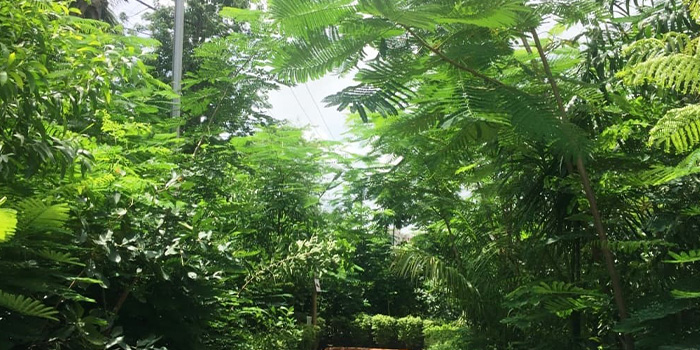
Planting trees in an urban area may look…
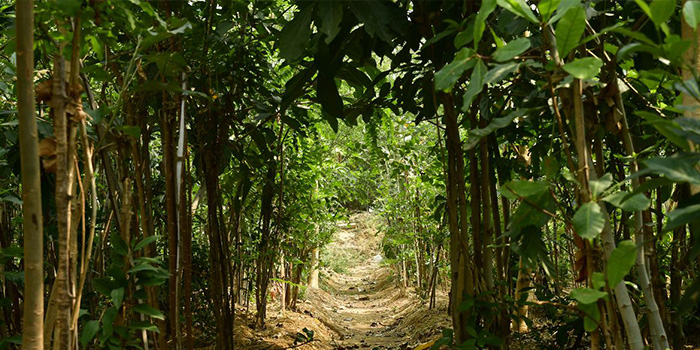
Urban Forest Planning: Miyawaki Method Forest, Afforestation, Tree Density & Biodiversity
An urban forest is more than a group of trees planted on empty land. A planned urban forest brings together the Miyawaki method forest, afforestation, proper tree density carefully chosen fast growing trees, biodiversity and the surrounding landscape to build a green space that can grow into a working ecosystem. For organizations planning a planting project this approach also opens the door to connecting social responsibility, responsible carbon offset planning and soil restoration with lasting environmental benefits.
The real challenge isn’t just deciding how many saplings to plant. The real challenge is understanding what the land needs, which species belong there how the forest should link with existing infrastructure and how its growth will be tracked after planting.
This guide explains the thinking behind this process and the key factors organizations should consider before starting an urban forest project.
Start With the Land, Not the Tree List
A plantation plan should begin with the site—not the list of trees.
Two plots may have the size but very different needs. One may have soil, good drainage and plenty of sunlight. Another may have compacted soil, construction waste, poor water movement or nearby buildings and roads.
These differences affect every decision that follows.
Before choosing tree species or setting planting density the site must be evaluated for:
- Existing soil condition
- Drainage and water movement
- Sunlight availability
- Existing vegetation
- Available planting area
- Nearby buildings and structures
- Roads and pedestrian paths
- Utility lines and service areas
- Future land-use plans
- Local climate and rainfall patterns
- The intended environmental purpose of the project
This site-first approach avoids a common error: assuming every planting site needs the same design.
An urban forest should fit its location than forcing the location to fit a standard model.
Urban Forest as a Landscape, Not an Isolated Plantation
A area rarely stands alone.
On a campus for example the planting might sit next to an office building, parking lot, boundary wall, road, walking path or drainage channel. In an area there could be active zones, machinery or utility systems that must remain undisturbed.
That’s why landscape planning becomes a core part of urban forest development.
Of asking only “Where can we plant trees?” a better question is:
“How can the green area become part of the property?”
A thoughtfully planned forest can connect existing trees with new vegetation create a green buffer along a fence improve a dull corner of a campus or help transition between built spaces and open areas.
In this way the plantation becomes part of a landscape strategy.
This idea works well when an organization wants real environmental improvement without treating greenery as a decorative add-on.
Where a Miyawaki Method Forest Fits
A Miyawaki method forest is one way to develop dense native vegetation—especially where space is limited and the goal is to create a multi-layered forest ecosystem.
The method, developed by Japanese botanist Dr. Akira Miyawaki focuses on species, close planting and restoring natural forest layers. It mixes shrubs, small trees and large canopy trees of relying on just one kind of tree.
The Miyawaki method should not automatically be used for every piece of land.
The right planting method depends on:
- Site conditions
- Ecological goals
- land
- Soil quality
- Water availability
- Existing vegetation
- Surrounding infrastructure
- Long-term use of the land
For some small sites a Miyawaki-style planting may work well. On sites a different form of afforestation or landscape design might be better.
The method should follow the land—not the way around.
Getting Tree Density Right
Tree density often comes up in connection with Miyawaki planting because plants are placed closely together.. Density should not be seen as just a number.
The goal is to create the balance between plants, available resources and the desired forest structure.
Dense planting can help form a strong canopy quickly as the vegetation grows.. The final plan still needs to take into account soil quality, water supply, species traits and the site’s ecological conditions.
A smart planting design considers roles for different plants.
| Plantation Role | Purpose |
| Shrub and lower vegetation | Supports levels of the forest and provides habitat |
| Medium-sized species | Helps build the layer of vegetation |
| Larger native trees | Contributes to long-term canopy development |
| Suitable fast growing trees | Can help establish early structure |
| Diverse native species | Builds ecological variety and resilience |
The aim is not to make the plantation look crowded.
The aim is to use the land while giving the forest the chance to grow into a healthy ecosystem.
Why Fast Growing Trees Are Part of the Equation
The phrase “fast growing trees” can sound appealing when a company wants visible results quickly. Faster establishment can certainly help during the stages of a planting.
Speed should not be the only reason to choose a tree.
A forest that relies much on growth rate without considering ecological fit may fail to deliver the balanced long-term forest that native planting aims for.
Species selection should consider:
- How well they match conditions
- Whether they are native and ecologically relevant
- Their water needs
- How big they will grow
- Their growth habits
- How they interact with the soil
- Their role in the forest layers
- Their value for animals and pollinators
- What they need over time
Some species grow faster at first while others grow more slowly but play important roles in a mature forest.
A good planting looks beyond the few months.
The question is not “Which trees grow fastest?”
It is, “Which mix of plants can create a forest over time?”
Soil Restoration: The Foundation Beneath the Forest
Planting on soil limits what happens below the surface.
Urban and industrial land may have been used for construction, traffic, excavation, storage. Left unused for years. These activities can damage soil structure. Reduce its ability to support healthy plants.
That’s why soil restoration becomes part of any planting plan.
The goal of soil preparation is not just to make the ground look fertile before planting. It is to create conditions for roots to grow, water to move nutrients to stay available and living organisms to thrive.
Depending on the site preparation might include dealing with:
- Compacted soil
- Lack of organic matter
- water retention
- Drainage issues
- Weak soil structure
- Poor rooting conditions
- Low biological activity
The exact steps should be decided based on site assessment—not by using the same soil mix everywhere.
As plants grow their roots, fallen leaves, microbes and natural decomposition all help the soil keep improving.
In this sense soil restoration is not a start-up step. It can become part of the sites long-term recovery.
Designing for Biodiversity of Just Green Cover
A plantation can have many trees and still offer little ecological diversity.
That’s why biodiversity must be included in the design from the beginning—not added later.
A diverse forest creates habitats and food sources for birds, butterflies, insects, pollinators, microorganisms and other creatures. Multiple layers of vegetation also create conditions within a small space.
Native species are especially valuable because they fit naturally into the environment.. Even then the right choices depend on climate, soil, rain and water access.
A biodiversity-focused planting considers how plants relate to living things.
The aim is not to list species on a plan.
The aim is to build a landscape where those species can help create a living ecosystem.
Biodiversity Should Be Planned for the Future
A planted site will not look like a mature forest right away.
Some plants take root quickly. Others grow slowly. The canopy may gradually get thicker. The undergrowth may change as light levels shift.
That means the design must allow for change.
The useful question is not:
“How will the plantation look on planting day?”
It is:
“How should this landscape function as it develops?”
Shifting the focus like this leads to a stronger longer-term planting plan.
Connecting Afforestation With Corporate Land Use
Afforestation takes on meaning when it connects to the actual use of the land.
For a company an urban forest might go in a corner of a campus around a boundary line inside an industrial plot or on another area where long-term greening makes sense.
Before moving the organization should decide what it wants the project to achieve.
Possible goals could include:
- Restoring damaged ecosystems
- Increasing plants
- Improving biodiversity
- Creating a green barrier
- Enhancing the site’s appearance
- Healing degraded soil
- Building a long-term CSR asset
- Supporting environmental efforts
This gives the project direction.
A planting designed around the number of saplings may have little lasting value.
One designed around land use, ecology and future care has a foundation.
How Corporate Social Responsibility CSR Can Become a Long-Term Project
For companies corporate social responsibility projects begin with a single planting event.
Such events can raise awareness. Get people involved.. The environmental impact doesn’t have to stop when the planting ends.
A developing urban forest offers a chance to turn CSR into a term environmental effort.
Companies can. Record:
- The area of the plantation
- The range of species used
- How many plants survive
- Growth over time
- Maintenance tasks
- Changes in the landscape
- Observations about biodiversity
- Photos taken at different stages
- Improvements to soil and site
Employees can also join awareness campaigns planting drives and biodiversity monitoring programs when appropriate.
The advantage is that the project stays visible, over time.
Of reporting only how many saplings were planted on a certain date an organization can show how a piece of land has changed through the seasons.
That makes the environmental story clearer and easier to follow.
Urban Forest and Carbon Offset: What Companies Should Understand
An forest can help support a larger carbon offset strategy.. Planting trees should not be seen as a simple math problem where the number of saplings equals a certain amount of carbon credits.
The actual carbon impact depends on things. These include the type of tree how well it survives how fast it grows how biomass it collects, how long the project lasts how measurements are taken and which carbon methodology is used.
Because of this companies should avoid saying things like “X trees automatically equal Y carbon credits.” That kind of statement only makes sense if the project has been reviewed under a method and all needed monitoring and verification steps have been followed.
A better way to think about it is to see planting as one part of a wider climate plan.
This kind of plan can include:
- Reducing emissions from operations
- Improving energy use efficiency
- Using resources in a responsible way
- Protecting areas with existing plants
- Restoring land that has been damaged
- Creating green spaces
- Tracking results
When good standards and measurement tools are in place data from plantings can help improve overall environmental reporting and carbon accounting.
What Should Be Measured After Planting?
Planting does not mean the project is done. It’s actually the beginning.
Early checks can reveal problems such as whether the plants survive how water they need if weeds are an issue or if some parts need extra care. Later checks can focus more on how the plants grow how thick the canopy becomes and what kinds of animals or insects start appearing.
A useful monitoring record could include:
- Total area planted
- Number and types of species
- How many plants survived and grew
- Maintenance needs
- Changes in plant structure
- Soil condition and improvement
- Biodiversity activity
- Photos of the site over time
- Water requirements
- Any changes to the site
This information helps the team see if the forest is growing as expected.
For businesses it also gives details for internal sustainability updates and longer-term environmental reports.
Common Planning Mistakes to Avoid
An forest project can lose its effectiveness if decisions are made too early without fully understanding the site.
Choosing fast-growing species
Fast growth can be helpful but it should not outweigh ecological fit, biodiversity goals or the long-term shape of the forest.
Treating tree density like a fixed number
The right number of trees depends on soil conditions the species chosen and the kind of forest being built. Copying a number from another project may not work for a location.
Ignoring existing infrastructure
Buildings, roads, drainage systems, utility lines and movement paths must be taken into account before finalizing the layout.
Thinking soil preparation is optional
Poor or packed soil can make it hard for trees to grow. Soil should be. Prepared based on the specific needs of the site.
Designing for the first year
A forest is alive and changes over time. The plan should consider how vegetation will develop, not how it looks immediately after planting.
Measuring success by counting trees
The number of saplings is just one measure. It does not show the picture of ecological progress.
A Practical Urban Forest Planning Sequence
A project tailored to the site can follow an order:
1. Site assessment
Understand the land, soil quality, sunlight, drainage, current plants and nearby buildings or infrastructure.
2. Define the objective
Decide what the main goal is— restoration, wildlife habitat, visual appeal, corporate responsibility, land recovery or a mix of these.
3. Choose the planting method
Check whether a Miyawaki-style forest or another afforestation approach fits the location.
4. Prepare the soil
Fix any soil problems such as compaction or lack of nutrients to give roots an environment.
5. Build the species list
Pick local plants that match the site’s conditions while considering their growth patterns and ecological roles.
6. Plan tree. Layers
Arrange plants according to the desired forest layering—canopy, understory, ground cover—rather than just trying to fit as many trees as possible.
7. Connect with the landscape
Integrate the forest with pathways, structures, existing greenery, boundaries and other site features.
8. Start the planting
Carry out the planting and initial protection based on the design plan.
9. Monitor development
Track survival rates, growth, maintenance needs, soil changes and signs of biodiversity.
10. Record everything
Keep photos and project records so progress can be shown over time.
This step-by-step process keeps the focus on the journey—not treating the day of planting as the final event.
When an Urban Forest Is the Right Choice
An urban forest might be an idea when an organization owns land that can stay open for long-term environmental development and wants to do more than just decorative landscaping.
It could be especially suitable for:
- campuses
- Industrial sites
- Schools and universities
- Residential neighborhoods
- New city developments
- Empty or underused plots
- Community-led environmental efforts
But suitability always depends on a site-specific evaluation. A small piece of land doesn’t require a Miyawaki forest just because it’s popular.. A large plot doesn’t automatically mean traditional plantings are best.
The strongest project is the one that matches the land the purpose and the natural environment.
Why Choose Harmony Urban Forest?
Harmony Urban Forest sees tree planting as a planning effort not just delivering trees for a one-time event. The company says it works with organizations to build native green ecosystems using the Miyawaki method. It takes into account factors like soil, climate, space available existing plants and future site plans.
For a business planning a forest this way of thinking can be very helpful because the design connects multiple choices.
Site understanding: The land and its surroundings should be considered before deciding on a planting strategy.
Native vegetation: Species can be selected based on ecology instead of relying only on fast-growing types.
Soil preparation: Damaged or compacted land can be checked first so roots have what they need.
Landscape integration: The forest can be shaped around buildings, walkways, fences and other green areas.
Biodiversity: Different plant species and layers can be included to support wildlife.
Long-term development: Monitoring and care can be built into the projects life cycle.
Harmony Urban Forest publicly shares its experience with Miyawaki forests, reforestation, restoring biodiversity and turning land into healthy native green spaces.
For companies looking at social responsibility landscape improvements, ecological recovery or smart carbon strategies the right starting point is not picking a tree count. It is talking about the conditions of the land and asking what kind of forest can realistically grow there.
Conclusion
A successful urban forest comes from a series of steps: understanding the land fixing soil where needed choosing the right native plants balancing the number of trees using fast-growing species wisely and planning for long-term biodiversity.
A Miyawaki forest can be a choice for small tight spaces—but it should only be picked if it fits the site. The same applies to afforestation, landscape planning, CSR programs and carbon offset plans.
The valuable forest isn’t the one with the highest number of trees. It’s the one that becomes a working part of the landscape and keeps growing long after the planting is finished.
For organizations planning a forest the first step should be simple: get to know the land define the goal design the ecosystem and plan what happens next.
Frequently Asked Questions
1. What is the main purpose of a forest?
An urban forest aims to bring a working system into cities or developed areas. Depending on the project it can support animal and plant life improve spaces restore nature fix soil and meet broader environmental goals.
2. Does higher tree density always mean a forest?
Not at all. Tree density needs to fit the plant types, soil, available resources and the forest structure intended. Just adding trees does not make the ecosystem healthier.
3. Why is soil restoration important before planting?
Soil thats ruined by construction or heavy foot traffic may block root growth and water flow. Fixing the soil first improves growing conditions. Helps the area recover naturally.
4. Can an urban forest be used for carbon offset purposes?
It can contribute to a carbon plan.. The number of planted trees should not be automatically turned into carbon credits or verified offsets. Carbon results depend on site- measurements, accepted methods, monitoring and proper standards.
5. What should companies check before starting a forest project?
Companies should look at soil, drainage, sun exposure, water supply, current plants, nearby structures, future land use, size of space and the main environmental goal. These details help pick the planting approach.
Related Posts