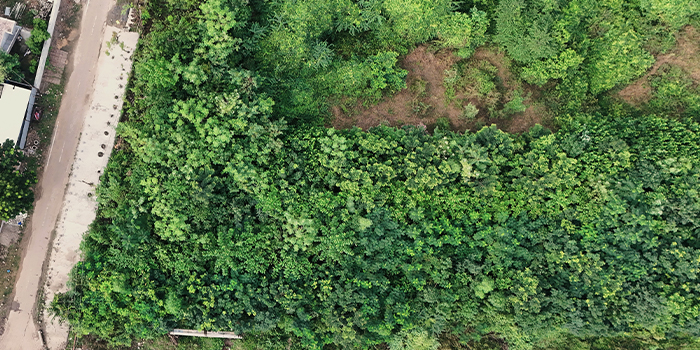
An afforestation company India plays an important role…
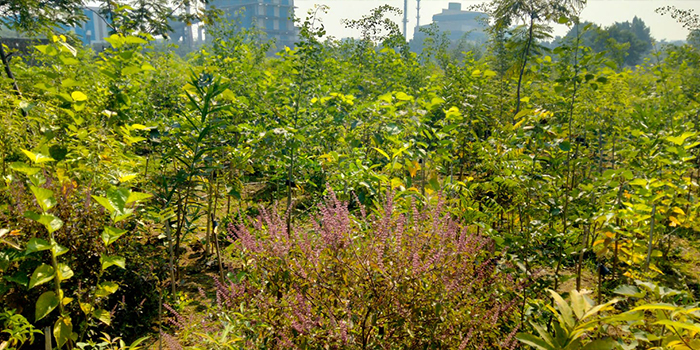
Miyawaki vs. Traditional Plantation for CSR Projects: Which is Better?
The landscape of corporate social responsibility is undergoing a massive transformation. Gone are the days when companies could simply plant a few hundred saplings on the outskirts of a city, take a few photographs, and consider their environmental duties fulfilled. Today, corporate sustainability India is driven by measurable impact, ecological science, and rigorous reporting frameworks.
As organizations look to invest their CSR funds into high-impact green infrastructure, a critical debate has emerged: should companies rely on traditional plantation methods, or should they invest in the rapid, high-density Japanese Miyawaki method?
For organizations aiming to maximize their ecological footprint within space-constrained urban environments, the answer is becoming increasingly clear. Let’s break down both methodologies and explore why the Miyawaki approach is setting the new gold standard for corporate environmental action.
Understanding Traditional Plantations
Traditional plantation methods are what most people picture when they think of “tree planting drives.” This approach generally involves:
- Spacing saplings far apart (often 10 to 15 feet).
- Focusing on a single species or a very limited mix of ornamental plants.
- Requiring vast expanses of land.
- Depending heavily on long-term watering, weeding, and often, synthetic fertilizers.
While traditional afforestation has its place—particularly in vast, rural agricultural tracts where commercial timber is the goal—it falls short in urban CSR contexts. Standard plantations grow slowly, suffer high mortality rates if not continuously maintained, and often fail to recreate a functioning, biodiverse ecosystem. They are landscaping, not ecology.
The Science of the Miyawaki Method
Developed by Japanese botanist Akira Miyawaki, this method is an intensive, scientifically backed approach to building self-sustaining native forests. Instead of spacing trees out, the Miyawaki method mimics the fierce, dense competition of a natural wild forest.
The core principles involve:
- Intense Density: Planting 3 saplings per square meter.
- Vertical Layering: Curating a specific mix of canopy, tree, sub-tree, and shrub layers.
- Deep Soil Engineering: Rebuilding degraded earth before a single seed is planted.
Bringing the Forest to the City
One of the most profound Miyawaki forest benefits is its spatial efficiency. Because of the density, these forests can be established on plots as small as 1,000 square feet. Whether it’s transforming an unused common open plot (COP) in an industrial park or integrating a green lung into a central residential Aangan (courtyard), the method proves that you don’t need acres of land to make an ecological impact.
For instance, a scientifically layered forest might feature a towering canopy of Kadamb and Sevan tree, an understory of Neem and Shahtoor, and a dense, moisture-retaining cover of Raat Rani and Hibiscus. This strict reliance on indigenous tree plantation India practices ensures the forest is naturally acclimatized to local weather, requiring zero maintenance or watering after the first two to three years.
Why Miyawaki Outperforms Traditional Methods for CSR
When corporate funds are deployed, stakeholders expect a return on investment—not in capital, but in ecological and social value. Here is why modern businesses are pivoting away from the traditional model.
1. Accelerated Growth and Measurable Impact
A Miyawaki forest grows up to 10 times faster and is 30 times denser than a conventional plantation. In just 2 to 3 years, the site transforms into a visible, lush thicket. For CSR initiatives, this rapid development provides immediate, tangible proof to stakeholders, employees, and the local community that the company’s environmental commitments are genuine and highly effective.
2. Eliminating Chemical Dependencies
True ecological restoration cannot rely on synthetic shortcuts. Unlike traditional landscaping that requires long-term chemical interventions, expert-led Miyawaki projects engineer the soil using purely organic, locally sourced biomass. By integrating traditional, time-tested nutritional practices—such as enriching the earth with Jeevamrut and Khaati Chaas (sour buttermilk)—the underground microbiome thrives. This creates a resilient, self-sustaining ecosystem that functions without chemical fertilizers.
3. Maximizing Carbon Drawdown
When companies set ambitious climate goals, they need sinks that actively pull emissions from the atmosphere. Because of the sheer volume of biomass packed into a small area, a Miyawaki forest offers exponentially higher carbon sequestration India capabilities per square meter than a traditional park. This makes it an invaluable asset for organizations working alongside a net zero carbon consultancy India to map out actionable, aggressive emission reduction strategies.
4. Restoring Micro-Habitats
Traditional monoculture plantations offer very little to local wildlife. In contrast, partnering with a specialized biodiversity restoration company to execute a multi-layered Miyawaki forest immediately creates a sanctuary for local fauna. The dense, indigenous flora invites back displaced birds, vital pollinators, and insects, successfully reversing habitat loss in concrete-heavy zones.
Aligning Ecological Action with Compliance Reporting
The regulatory environment in India is shifting from voluntary disclosures to mandatory, data-driven transparency. Green initiatives can no longer just be “feel-good” stories; they must be verifiable.
Integrating a highly structured Miyawaki project directly supports ESG compliance India. It provides corporate boards with exact, trackable outcomes: the specific square footage of habitat restored, the exact number of native species revived, and the precise rate of carbon drawdown.
Furthermore, for top-tier companies subject to stringent regulatory frameworks, these measurable data points seamlessly feed into BRSR reporting India requirements. A well-documented urban forest converts abstract ecological goodwill into quantifiable sustainability indicators that satisfy auditors, investors, and regulators alike.
The Need for Specialized Expertise
While the benefits are immense, the Miyawaki method is not a DIY weekend project. The precision required to execute it correctly—from the complex soil engineering using natural perforators to the exact curation of competitive native species—requires deep, localized knowledge.
This is why forward-thinking organizations hire a dedicated Miyawaki forest consultant. Professional execution ensures that the CSR budget is translated into a permanent, self-sustaining green asset rather than a failed landscaping experiment. A specialized consultant bridges the gap between corporate compliance and complex landscape architecture, guaranteeing survival rates that traditional plantations simply cannot match.
Conclusion: The Future of Corporate Greening
The debate between Miyawaki and traditional plantations ultimately comes down to intent. If the goal is simply to plant trees for the sake of a photo opportunity, traditional methods might suffice. However, if a company’s goal is real environmental restoration, rapid carbon sequestration, and measurable community impact, the choice is clear.
By embracing dense, native urban forests, Indian corporate has the power to transform barren plots into thriving ecological engines. It is an investment that pays dividends for the soil, the atmosphere, and the community for generations to come.
FAQs
1. Why is the Miyawaki method considered better for corporate sustainability India initiatives?
The Miyawaki method creates dense native forests that grow much faster than traditional plantations. It helps organizations achieve measurable environmental outcomes, making it a preferred solution for corporate sustainability India programs focused on long-term ecological impact.
2. How does a Miyawaki forest contribute to tree plantation CSR India projects?
A Miyawaki forest delivers higher biodiversity, faster growth, and better survival rates than conventional plantations. This makes it ideal for tree plantation CSR India projects seeking visible and measurable environmental results within a shorter period.
3. Can a Miyawaki forest support carbon credit plantation India goals?
Yes. Due to its dense planting structure and rapid biomass growth, a Miyawaki forest can function as a strong natural carbon sink India, helping organizations support carbon credit plantation India and carbon offset plantation India objectives.
4. Why should companies work with a Miyawaki forest consultant India?
A Miyawaki forest consultant India provides expertise in species selection, soil preparation, forest design, and long-term monitoring. Professional guidance improves forest survival, ecological balance, and project success.
5. How is a Miyawaki forest different from traditional afforestation methods?
Traditional plantations usually involve widely spaced trees and lower biodiversity. In contrast, the Miyawaki afforestation technique creates a dense native forest India ecosystem with multiple vegetation layers that closely mimic natural forests.
6. Can an urban forest plantation company develop forests in small spaces?
Yes. An experienced urban forest plantation company can establish Miyawaki forests on small urban plots, corporate campuses, industrial zones, schools, and residential communities while maximizing ecological benefits.
7. How does a Miyawaki forest support ESG compliance India requirements?
Miyawaki forests generate measurable environmental data such as carbon sequestration, biodiversity restoration, and green cover enhancement. These outcomes help organizations strengthen ESG compliance India initiatives and sustainability reporting.
8. What role does a Miyawaki forest play in BRSR reporting India?
A well-documented Miyawaki project provides quantifiable sustainability metrics, including native species planted, carbon absorption potential, and habitat restoration data, which can support BRSR reporting India disclosures.
9. How does indigenous tree plantation India improve biodiversity restoration?
Indigenous tree plantation India uses native species adapted to local climatic conditions. This approach attracts birds, pollinators, and beneficial insects, making it highly effective for biodiversity restoration company projects and ecological regeneration.
10. Why are companies choosing Miyawaki forests for net-zero goals?
Organizations working with a net zero carbon consultancy India often choose Miyawaki forests because they offer higher carbon sequestration India potential, faster forest development, and stronger ecosystem restoration compared to traditional plantation models.
Related Posts