
An afforestation company India plays an important role…
How Urban Forests Contribute to Net-Zero and ESG Commitments in India
As India accelerates its transition toward a low-carbon economy, businesses are increasingly aligning their operations with net-zero targets, Environmental, Social, and Governance (ESG) frameworks, ESG compliance India, and sustainability reporting requirements. From manufacturing industries and IT campuses to real estate developers and educational institutions, organizations are actively seeking impactful environmental initiatives that create measurable ecological and social value.
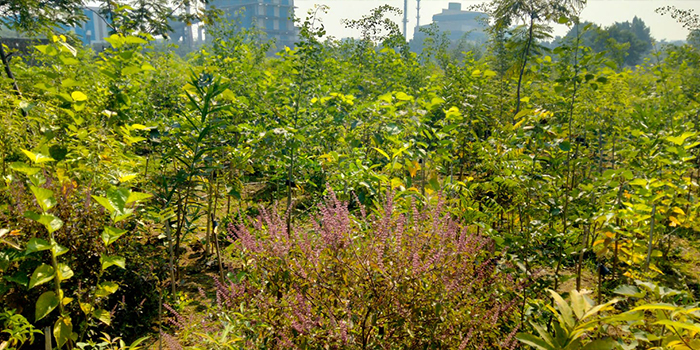
Among the most effective nature-based solutions gaining momentum today are urban forests. Developed using the Dr Akira Miyawaki method has widely adopted in recent years, these dense green ecosystems are helping organizations strengthen their sustainability strategies while contributing to climate action, biodiversity restoration, and community engagement.
For companies pursuing corporate sustainability India goals, urban forests are emerging as a strategic investment that delivers long-term environmental, social, and governance benefits.
Why Urban Forests Matter in the Age of Net-Zero
The global push toward net-zero emissions requires organizations to reduce greenhouse gas emissions while simultaneously increasing carbon removal through nature-based solutions. While renewable energy and energy efficiency remain important pillars of decarbonization, organizations are increasingly recognizing the value of creating a natural carbon sink can rely on for long-term climate resilience.
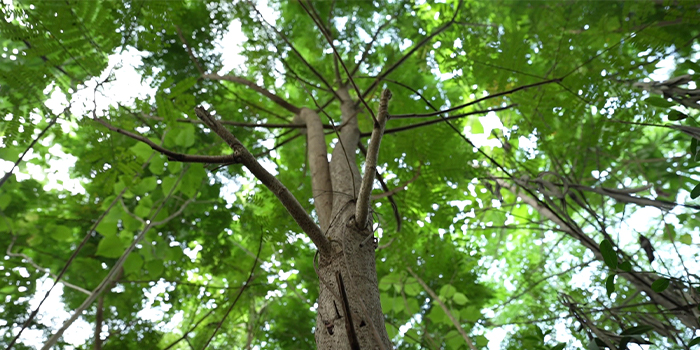
Urban forests act as living carbon reservoirs. Through photosynthesis, trees absorb atmospheric carbon dioxide and store it within their trunks, branches, roots, and surrounding soil. Over time, these forests contribute significantly to carbon sequestration while improving local environmental conditions.
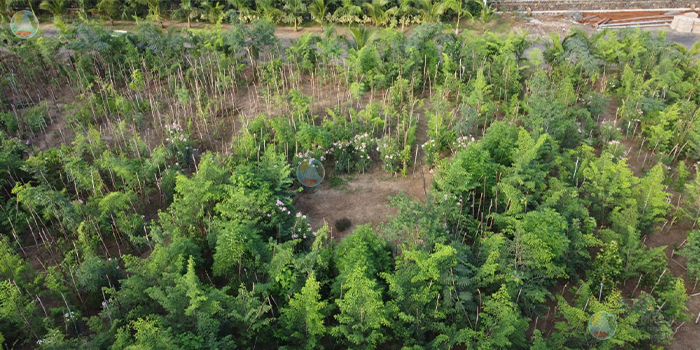
Unlike conventional landscaping projects, Miyawaki forests create highly dense ecosystems using native species planted close together. This results in faster growth, greater biomass accumulation, and increased carbon capture potential.
As a result, many organizations are integrating urban forests into their sustainability roadmaps and exploring their potential role in future carbon credit plantation India initiatives.
The Power of the Miyawaki Method
The Miyawaki method has become synonymous with rapid urban afforestation. Developed by renowned Japanese botanist Dr. Akira Miyawaki, this scientific plantation technique focuses on restoring native ecosystems by planting multiple indigenous species in dense clusters.
The approach differs significantly from traditional plantation models:
- Uses only native species
- Mimics natural forest ecosystems
- Creates multi-layered vegetation structures
- Achieves faster growth rates
- Requires near to zero maintenance after just 3 years of establishment
- Encourages biodiversity restoration
Within just 2–3 years, a Miyawaki plantation can transform barren or underutilized land into a thriving dense native forest India which organizations can proudly showcase as part of their sustainability initiatives.
These forests not only capture carbon but also improve soil health, attract pollinators, reduce dust pollution, and enhance ecological resilience.
What Are ESG Goals and Why Do They Matter?
Environmental, Social, and Governance (ESG) goals are a framework used to measure a company’s impact on the environment, society, and its governance practices. ESG has become a key factor influencing investor decisions, regulatory compliance, brand reputation, and long-term business success.
The Three Pillars of ESG
Environmental (E): Focuses on reducing environmental impact through initiatives such as carbon reduction, energy efficiency, water conservation, waste management, and biodiversity protection.
Social (S): Measures how a company contributes to employee well-being, community development, diversity, and stakeholder engagement.
Governance (G): Evaluates transparency, ethical business practices, accountability, compliance, and sustainable decision-making.
Why ESG Matters
Organizations with strong ESG performance are better equipped to manage risks, attract investors, meet regulatory requirements, and build trust with customers and stakeholders. As sustainability becomes a business priority, ESG provides a structured approach to creating long-term environmental and social value.
Miyawaki plantation method of making urban forests support all three ESG pillars by capturing carbon, enhancing biodiversity, engaging communities, and providing measurable sustainability outcomes that strengthen corporate sustainability commitments.
Urban Forests and ESG Performance
ESG reporting has become a key consideration for investors, regulators, customers, and stakeholders. Urban forests support all three pillars of ESG and provide measurable outcomes that strengthen sustainability disclosures.
Environmental Benefits
The environmental impact of urban forests extends well beyond carbon sequestration.
Biodiversity Enhancement
One of the biggest challenges facing urban India is biodiversity loss. Native urban forests create habitats for birds, butterflies, bees, and beneficial insects that are often displaced by urbanization.
A dense native forest India project can restore ecological balance while supporting regional biodiversity conservation goals. Trees naturally filter airborne pollutants and particulate matter. Urban forests improve local air quality, creating healthier environments for employees, residents, and surrounding communities.
Urban forests improve water infiltration, reduce runoff, and promote groundwater recharge. Their root systems help stabilize soil and reduce erosion during heavy rainfall events.
These environmental benefits contribute directly to ESG metrics related to biodiversity, climate action, water stewardship, and pollution mitigation.
Social Benefits
The Social component of ESG focuses on creating positive outcomes for employees, communities, and stakeholders.
Urban forests deliver meaningful social value through:
- Improved mental health and well-being
- Community participation programs
- Educational opportunities
- Increased green spaces in urban areas
Many organizations now integrate tree plantation CSR India initiatives into employee engagement programs, allowing staff members to actively participate in environmental restoration activities.
Such programs create stronger connections between employees and sustainability goals while fostering a culture of environmental responsibility.
Governance Benefits
Strong governance requires transparency, accountability, and measurable sustainability performance.
Urban forest projects can be monitored using indicators such as:
- Number of trees planted
- Survival rate
- Native species diversity
- Area restored
- Carbon sequestration estimates
- Community participation levels
These measurable outcomes strengthen sustainability reporting and demonstrate authentic environmental action rather than symbolic green initiatives.
Why CSR Programs Are Shifting Toward Urban Forests?
Traditional CSR projects often generate short-term benefits that diminish once funding ends. Urban forests, however, continue creating environmental and social value for decades.
As a result, many companies are prioritizing tree plantation CSR India projects that align with both community development and climate action objectives.
Urban forests offer:
- Long-term environmental impact
- Visible sustainability outcomes
- Biodiversity restoration
- Climate resilience
- Improved public perception
- ESG reporting support
For organizations seeking high-impact CSR investments, partnering with an experienced urban forest plantation company provides a practical pathway to achieving sustainability objectives.
The Growing Role of Afforestation in Corporate Sustainability
India’s sustainability landscape is evolving rapidly. Increasing regulatory requirements, investor expectations, and stakeholder awareness are encouraging businesses to adopt measurable environmental initiatives.
This has created growing demand for professional afforestation services and ecological restoration projects.
An experienced afforestation company India can help organizations:
- Identify suitable plantation sites
- Conduct ecological assessments
- Select native species
- Design Miyawaki forests
- Monitor plantation performance
- Measure sustainability outcomes
By partnering with a qualified Miyawaki forest consultant India, organizations can ensure that plantation projects generate meaningful ecological value while supporting broader sustainability objectives.
Urban Forests as Future Carbon Assets
As voluntary carbon markets continue to evolve, organizations are exploring opportunities to develop long-term nature-based carbon assets.
While carbon credit generation depends on multiple technical and regulatory factors, well-managed urban forests have the potential to contribute toward future carbon credit plantation India programs.
More importantly, they provide immediate environmental benefits that strengthen ESG performance and corporate sustainability commitments.
By creating a natural carbon sink India can depend upon for future climate resilience, organizations contribute to both local ecological restoration and national climate goals.
Conclusion
Urban forests have emerged as one of the most effective tools for achieving sustainability objectives in modern India. By combining carbon sequestration, biodiversity restoration, climate resilience, employee engagement, and community impact, they support both net-zero ambitions and comprehensive ESG strategies.
Whether developed through the Miyawaki method, implemented as a tree plantation CSR India initiative, or managed through a professional urban forest plantation company, these forests create long-lasting environmental value that extends far beyond traditional landscaping.
As businesses strengthen their corporate sustainability India commitments, urban forests are becoming more than green spaces—they are strategic assets that help organizations build a resilient, climate-positive future while contributing to a greener and healthier India.
FAQs
1. What are urban forests in the context of ESG compliance India?
Urban forests are dense green ecosystems developed in cities using native trees to support ESG compliance India goals by improving air quality, biodiversity, and carbon absorption.
2. How do urban forests help achieve net-zero targets?
Urban forests act as natural carbon sinks by absorbing CO₂ through trees and soil, helping organizations reduce their overall carbon footprint and move toward net-zero targets.
3. What is the Miyawaki method used in urban forests?
The Miyawaki method is a plantation technique developed by Dr. Akira Miyawaki that creates fast-growing, dense native forests with high biodiversity and rapid ecological restoration.
4. How do urban forests support corporate sustainability India goals?
They help companies meet corporate sustainability India targets by improving environmental performance, supporting CSR activities, and enhancing ESG reporting outcomes.
5. Can urban forests contribute to carbon credit plantation India projects?
Yes, well-maintained urban forests can contribute to carbon credit plantation India initiatives by increasing carbon sequestration and supporting verified climate mitigation efforts.
6. What are the key ESG benefits of urban forests?
Urban forests support ESG by improving environmental quality, enhancing social well-being through community engagement, and strengthening governance through measurable sustainability data.
7. Why are companies investing in Miyawaki forest consultant India services?
Companies hire Miyawaki forest consultant India experts to design scientifically planned forests that ensure higher survival rates, faster growth, and better ESG impact.
8. How do urban forests improve biodiversity in cities?
They restore native ecosystems, attract birds, pollinators, and insects, and rebuild ecological balance lost due to urbanization and industrial development.
9. What is the role of urban forest plantation company in CSR projects?
An urban forest plantation company helps design, implement, and maintain large-scale green projects that align with CSR and sustainability goals.
10. How do urban forests act as a natural carbon sink India depends on?
Urban forests absorb carbon dioxide, store it in biomass and soil, and continuously reduce atmospheric carbon levels, acting as a long-term natural carbon sink India needs for climate stability.
Related Posts